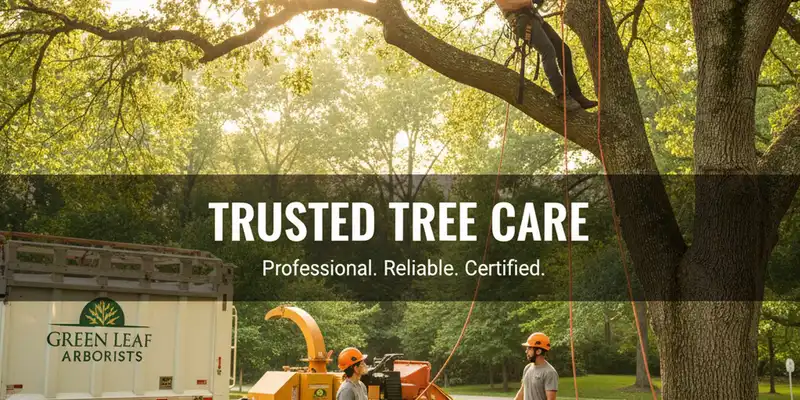
Arlington’s long-established neighborhoods — from the Pantego-adjacent streets near Pioneer Parkway to the older, tree-lined blocks around Green Oaks Boulevard — combine mid-century ranch homes, newer master-planned developments, and commercial areas shaded by mature post oak and cedar elm trees. Thick overhead growth, close utility lines, and packed clay soil can make access and root care more complicated. The network of tree care professionals in Fort Worth knows how to evaluate root intrusion, remove storm-damaged limbs from narrow lots, and manage aging trees so properties stay safe and easy to reach through Arlington’s demanding seasonal weather.
That is why more property owners in Arlington, TX, are choosing Arbor Tree Care to help keep their trees and yards in good shape all year.

Prefer to Talk to An Expert?
(682) 990-9844
Why Arlington Property Owners Choose Local Experts
Because these crews work in the area every day, they understand the heavy clay soil, dense post oak and cedar elm canopy, and nearby utility corridors that shape tree care in Arlington. Each job is completed with the equipment and methods best suited to local properties, including work around foundation pressure, storm-related limb failure, and tight access common across the DFW metroplex.
From professional tree pruning solutions in the older subdivisions near Randol Mill Road to reliable stump removal services for post oak remnants near the entertainment district on Collins Street, every project is approached with care, accuracy, and an eye toward long-term system health.
If you care about your property, work with local contractors who can help keep the canopy balanced, the roots protected, and the site safe in Arlington.
Our Tree-Service Services
in Fort Worth, TX, Include
Tree Services Built for Arlington Neighborhoods
Arlington’s mature trees and tight lot layouts call for tree service that is tailored, not generic. That is why local professionals adjust their approach for residential streets, commercial properties, and park-adjacent landscapes throughout the city.
Whether you own a mid-century ranch in Dalworthington Gardens, a newer two-story home in Viridian, or a commercial site near AT&T Stadium on Division Street, the work is shaped by the property itself.
From tree trimming and tree disease treatments to root protection and emergency tree services, each service is matched to the neighborhood and the needs of the site.
Arlington’s Tree Canopy, Shaped by Decades of Growth
Arlington has grown through multiple eras, from post-war neighborhoods to the suburban expansion of the 1980s and 1990s. Those layers of development still show up today in mature post oak stands, compacted clay subsoil, and older tree placements near utility lines that influence how tree care must be handled now.
Foundation and Root Zone Encroachment
In many Arlington neighborhoods, especially older areas near Fielder Road and the Pantego border, mature trees have spent decades extending roots into foundations, sidewalks, and underground utilities. The result can be pavement lifting, foundation stress, and tougher access for crews.
Local professionals address root zone encroachment through targeted root protection assessments, careful excavation around infrastructure, and selective root pruning to help reduce future access problems and limit the chance of expensive foundation repairs.
Mature Post Oak and Cedar Elm Canopy Density
Arlington’s established canopy adds shade and character, but dense post oak and cedar elm growth can also create branch conflicts. When limbs overlap, bark inclusion failure becomes more likely, and the canopy can catch more wind during storms.
Professionals handle these conditions with selective thinning, directional pruning, and careful crown reduction designed around existing root systems and overhead utility layouts in Arlington’s older neighborhoods.
Soil Compaction and Drainage Stress
Years of clay soil swelling and shrinking have made it harder for some Arlington trees to get enough oxygen at the roots and absorb nutrients, especially in low-lying yards where water lingers after heavy rain.
Trusted pros respond with tree fertilizing programs, soil management practices that support aeration, and drainage-aware planting strategies that encourage stronger roots and steadier canopies across affected properties.
High-Wind Storm Damage and Limb Failure
Because Arlington sits in an open suburban area along DFW’s storm path, severe thunderstorms, hail, and straight-line winds can cause sudden limb failure, toppled trees, and debris across driveways and structures.
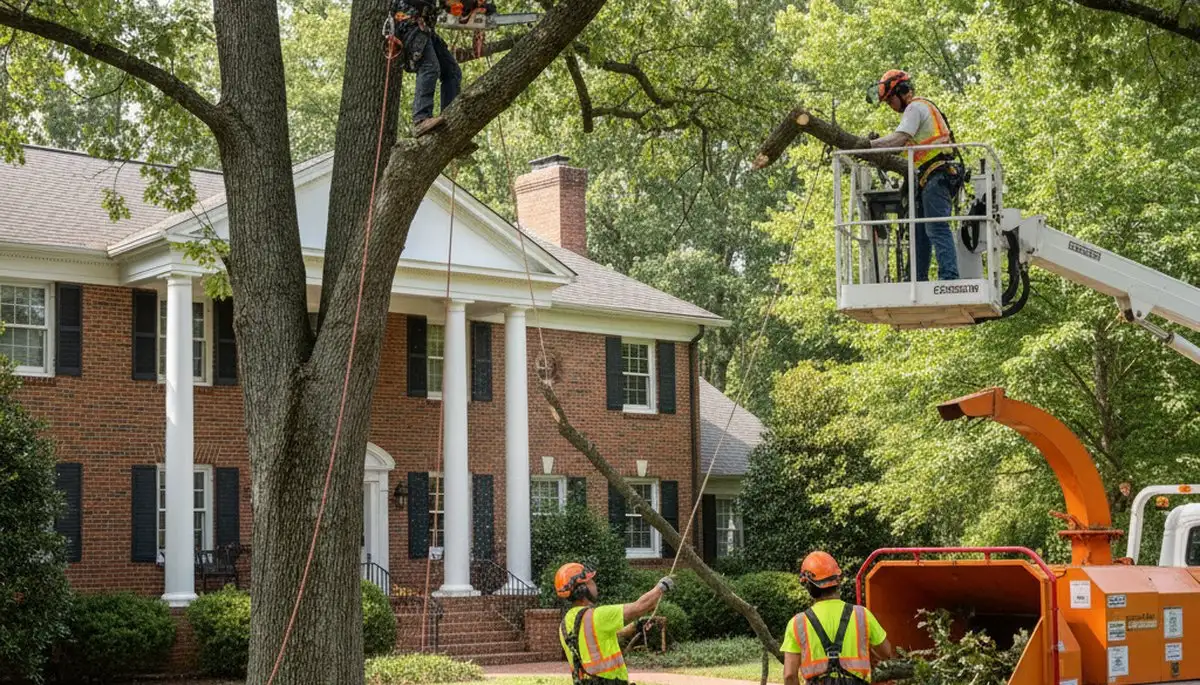
Experienced crews use storm damage response methods with aerial lifts, rigging systems, and controlled sectional removal to clear debris safely and assess structural damage, even when the ground is wet or access is limited after a storm.
Utility Line Proximity and Restricted Access Lots
Overhead utility lines along residential alleys and major roads like Cooper Street and Arkansas Lane make pruning and clearance work more complex in Arlington.
Local pros rely on compact aerial equipment and hand-climbing methods, always focusing on utility clearance and property protection to serve everything from open front yards to tight backyard spaces with narrow gate access.

Launch your tree service project today
Tree Services in Arlington, TX: Seasonal Care for Every Property
From routine maintenance to urgent storm response, local professionals help keep properties orderly, structurally sound, and protected throughout the year:
Routine Tree Trimming and Pruning in Arlington, TX
- Canopy thinning along Green Oaks Boulevard corridors: Reducing wind resistance in dense post oak canopies along older residential streets, which improves airflow and helps lower the chance of storm-related limb failure.
- Directional pruning near utility lines on Cooper Street: Managing growth near power and communication lines with controlled cuts that support tree health while maintaining required clearance.
- Crown shaping for cedar elm clusters in Dalworthington Gardens: Addressing the multi-stem growth pattern common in cedar elms to improve balance and reduce bark inclusion splits during strong winds.
- Seasonal tree trimming for HOA standards in Viridian: Keeping height and spread within community guidelines while correcting growth that reaches fences, walkways, and neighboring lot lines.
- Shrub line and understory tree pruning near River Legacy Parks: Balancing residential landscaping with natural tree buffers so growth stays organized without disturbing established root systems. Crews handling similar canopy work also provide tree trimming services in Grand Prairie, TX throughout the shared DFW corridor.
Schedule seasonal trimming before Arlington’s spring storm season to reduce canopy weight and lower the risk of limb failure on your property.
Tree Removal Services in Arlington, TX
- Hazardous tree removal near AT&T Stadium and the entertainment district on Division Street: Removing compromised trees from busy commercial areas where falling limbs can create immediate safety hazards.
- Dead post oak removal in mid-century residential lots near Fielder Road: Taking out standing dead trees before decay weakens trunk stability and increases the risk of storm failure.
- Storm-damaged tree removal after severe weather: Clearing split trunks, uprooted root balls, and hanging debris left behind by straight-line winds and hail in Arlington neighborhoods.
- Tree removal of invasive species near creek buffers along Johnson Creek: Clearing cedar and invasive hackberry growth that competes with native canopy trees and spreads into drainage easements.
- Multi-stem tree removal from foundation-adjacent zones: Removing trees with root systems that have reached slab foundations or utility corridors, using careful sectional removal to avoid more structural damage.
Removing dead or storm-damaged trees quickly can reduce liability and help protect nearby healthy trees from added pest and disease pressure.
Stump Grinding and Cleanup in Arlington, TX
- Stump grinding in backyard lots with restricted gate access near Randol Mill Road: Using compact grinding equipment to reach stumps in narrow residential spaces where larger machines cannot fit through standard fence openings.
- Post oak stump removal from front yard landscape beds: Grinding below grade so the area can be replanted or restored without surface obstructions that interfere with mowing and irrigation.
- Multi-stump clearance projects for commercial properties near I-20 and Collins Street: Handling several stumps at once across parking lot edges and landscape buffers to limit disruption to business operations.
- Root ball debris cleanup after large tree extraction: Removing exposed root remnants and backfilling disturbed soil to restore grade and reduce trip hazards in high-traffic areas.
- Stump removal near sidewalk and driveway edges in older Pantego-adjacent neighborhoods: Addressing stumps whose remaining roots continue to push against hardscape surfaces, correcting movement before cracks worsen. Property owners near the Euless corridor can also request emergency tree services in Euless, TX for urgent post-storm stump and debris issues.
Stump grinding helps stop regrowth, removes pest harborage, and restores usable space on residential and commercial properties across Arlington.
Emergency Tree Services in Arlington, TX
- 24/7 fallen tree response after severe storms: Sending crews to clear trees from driveways, rooftops, and roadways after straight-line wind and hail events that often affect the DFW corridor through Arlington.
- Hanging limb removal from structures and fences: Addressing partially attached limbs over occupied buildings, vehicles, and utility lines that could fall at any time after storm damage.
- Emergency tree services for uprooted trees near Johnson Creek and low-lying residential zones: Handling root ball removal and soil stabilization where saturated ground makes uprooting more likely during heavy rain.
- Post-storm canopy assessment and hazard identification: Inspecting properties after major weather events to find hidden structural damage, bark splits, and root disturbance that may not be visible right away.
- Emergency debris clearance for blocked access routes near Pioneer Parkway and Arkansas Lane: Restoring driveways and roads blocked by fallen limbs and trunk sections so residents and emergency vehicles can move through safely.
Fast emergency response can limit secondary damage, reopen access, and identify structural tree hazards before the next storm reaches Arlington.